Replacing a roof in New Jersey is part construction project, part logistics puzzle. Between coastal wind and salt, freeze-thaw cycles inland, and municipal rules that vary from town to town, the same house can see different bids and different scopes a few miles apart. I have walked more than a few steep Capes and rambling colonials across the state, and I’ve learned that the right plan balances shingle choice, flashing details, ventilation, and schedule, not just the headline price.
What drives the price of a new roof in New Jersey
Most homeowners start with a simple question, what is the price of new roof work for my house. The honest answer is a range, because several factors stack together. Size matters most. Roofers estimate in squares, each square equals 100 square feet of roof surface. Steeper roofs eat more labor and safety setup. Complex layouts with valleys, dormers, and skylights require more flashing work, which slows crews and adds materials. Tear-off adds haul-away, and extra layers add more. Decking condition can swing costs if rot or delamination appears after the old shingles come off.
Across New Jersey in 2026, the installed new roof cost for architectural asphalt shingles typically lands between 450 and 900 dollars per square for straightforward, single-layer tear-offs with standard flashing. Simpler, low-slope ranches with easy access can come in near the lower half of the range. A steep Victorian with two layers to strip, multiple chimneys, copper valleys to replicate, and city permit hoops can land in the upper bracket or beyond.
You will see outliers. A rock-bottom price often means minimal attic ventilation, thin underlayment, or reused flashing. A very high number can include heavy ice barrier coverage, premium shingles, deck re-sheathing, and extended warranties with manufacturer certification. The total difference can be several thousand dollars on a typical New Jersey home.
A quick primer on squares, waste, and why bids differ
If your house has 2,000 square feet of floor area, that does not mean a 20 square roof. Roof area spreads over slopes, and pitch increases surface. A 24 square roof is common on a modest two-story colonial. Waste is real. A simple gable may only see 7 to 10 percent waste, while a roof with many hips, valleys, and cuts can push 15 to 20 percent. When you compare bids, note the square count, waste allowance, and whether tear-off and new flashings are included. If one Roofing contractor near me writes 28 squares and another writes 24 for the same home, ask how each measured and what is in the count.
Shingle choices that make sense for New Jersey homes
Asphalt shingles dominate here for good reasons, especially the balance of price, curb appeal, and weather resistance. The jump from entry level to mid grade often brings better adhesives, heavier mats, and longer wind warranties, which matter when a nor’easter pushes gusts for hours. Here are the options I recommend most often, with their practical trade-offs:
- Three-tab shingles: Lowest price, flat look, shorter life in real conditions. Acceptable for sheds or when budgets are tight, but often a false economy on primary homes. Architectural or dimensional shingles: The neighborhood standard. Thicker profile hides minor deck imperfections, resists wind better, and looks richer. Most manufacturers rate these for 110 to 130 mph winds with enhanced installation. Premium designer shingles: Heavier, shaped profiles that mimic slate or shake without the weight. Strong curb appeal in historic districts, but added cost and sometimes more labor at hips and ridges. Impact-resistant asphalt: Benefits hail-prone regions most. In New Jersey, these matter more along the northwest hills where hail pops up, less so on the coast. Insurance discounts vary by carrier. Algae-resistant lines: Look for shingles with copper or zinc granules to fight the black streaks common in humid parts of the state. On shaded lots, this upgrade pays back in appearance.
A note on color: darker shingles absorb heat, which can speed melt after snow but also raise attic temperatures in summer if ventilation is weak. With good airflow, color choice becomes more about style and energy balance than hot attics.
Ice, water, and the New Jersey code baseline
State code and most municipalities require self-adhered ice and water shield along eaves. The rule of thumb is to extend the barrier 24 inches inside the warm wall, measured horizontally from the interior face, not just 24 inches up the roof. On low pitches, that can be two courses. I also like to see ice barrier in valleys and around penetrations, especially along the coast where wind can drive rain uphill.
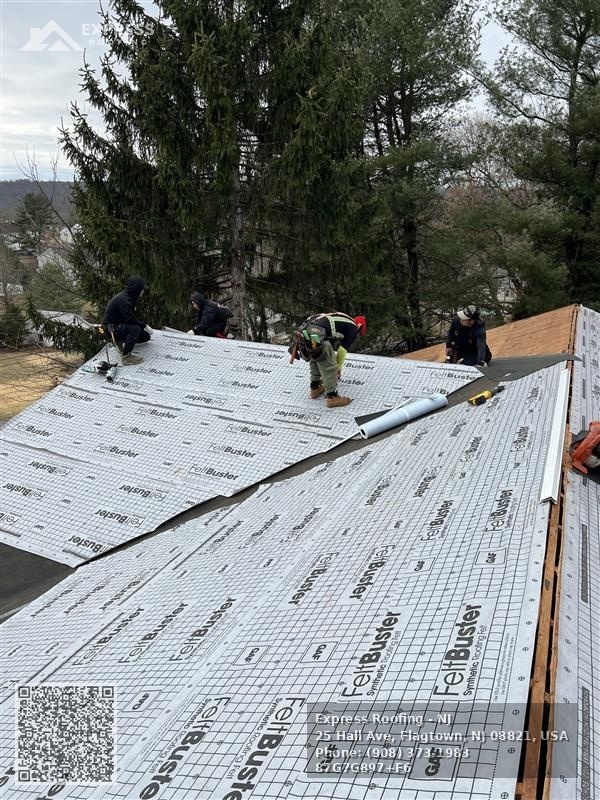
Synthetic underlayments have become the standard over felt. They resist tearing under foot traffic and hold up better if weather stalls installation. That said, they are not a license to leave a roof exposed; if a contractor covers Friday and plans to shingle Monday, the edges should be taped or mechanically secured so wind cannot peel sheets.
Flashing and the small details that stop leaks
In my experience, the difference between a clean 20-year roof and a headache at year five is usually flashing. Chimneys need step flashing woven into the shingle courses, then counter-flashing cut into mortar joints, not surface-glued. Skylights should get the manufacturer’s kit. Sidewalls need step flashing under the siding or cladding, which often means removing and reinstalling a course of siding rather than face-sealing with caulk.
Valleys spark debate. Open metal valleys drain quickly and are easy to inspect; closed-cut shingle valleys blend visually but require tight technique. I favor open valleys with prefinished aluminum or steel inland, and a heavier gauge, even copper, on older homes that already have metal accents. At the shore, choose corrosion-resistant metal, and avoid dissimilar metal contact that accelerates galvanic corrosion.
Ventilation and why it affects both longevity and warranties
A poorly vented attic cooks shingles and condenses moisture in winter. Manufacturers call out minimum net free ventilation area, often near a 1 to 150 ratio of attic floor area to vent area, sometimes relaxed to 1 to 300 with balanced intake and exhaust. If I walk an attic and smell mildew or see rusted nail tips, we fix ventilation as part of the Roof replacement. Typical fixes include continuous soffit intake, a ridge vent with a proper cut, or a combination of gable vents balanced correctly. Power fans solve some heat issues, but they can short-circuit intake and draw conditioned air from the house if air sealing is poor.
A note on cathedral ceilings: without a vent channel above insulation, the shingle deck runs hot. In those assemblies, use high temperature underlayment, and strongly consider a lighter shingle color or above-deck vent products.
Tear-off versus overlay, and what New Jersey allows
Many towns in New Jersey allow up to two layers of asphalt shingles. Overlaying saves tear-off and debris costs, but it traps unknown deck conditions and telegraphs old bumps and waves. It also voids many enhanced warranties. Every time I have peeled two layers on a house near the Raritan, I have found at least some soft OSB around pipes and vents. If a roof already holds one layer in fair condition and budget pressure is real, an overlay is possible, but I advise homeowners that the “savings” often vanishes if a leak later forces repair across two layers. Most reputable Roofing companies in New Jersey will recommend tear-off unless the roof is very simple and the substrate is known.
Decking surprises and what to plan for
You cannot fully evaluate decking until shingles and underlayment are gone. Plan for a contingency. On 1950s and earlier homes, you may see 1x plank decking with gaps. It can be reused if sound, but expect some board replacement at eaves. On later homes with OSB, edges near skylights, chimneys, and low valleys take the brunt of past leaks. I carry extra sheets on the truck for that reason. Ask your contractor how they price deck repairs. A fixed per-sheet rate avoids haggling midday.
Permits and local practice, from Bergen to Cape May
Permits are not optional in most New Jersey municipalities, even for straightforward re-shingles. Processing times vary. Smaller towns can issue over the counter or within a few days, while larger cities may need a week or two. Costs range widely, sometimes as a flat fee, sometimes with percentage adders. If someone offers to “skip permits,” walk away. An unpermitted roof complicates resale, and you lose the inspector’s second set of eyes on code items like ice barrier and ventilation.
Historic districts in places like Montclair or Princeton can add review steps for profile and color. Shore towns may add or enforce stricter wind nailing patterns and metal specs. Multi-family and HOA communities often have their own roof standards and colors. I once had a townhouse project in Cherry Hill delayed three weeks because the HOA’s approved ridge cap was discontinued; we needed written acceptance for the substitute. Build time into your plan.
Real numbers on typical homes
Ranges help, but real examples help more. Consider these ballpark scenarios for architectural shingles, tear-off included, standard flashings and ventilation, and modest contingencies:
A small Cape in Middlesex County, about 18 to 20 squares, simple gable, one chimney, easy driveway access. Expect 9,000 to 14,000 dollars, with the lower number if decking is clean and waste is low, and the upper number if steep or with a dormer addition that adds cuts.
A two-story center hall colonial in Morris County, about 26 to 32 squares, two valleys, one skylight, medium pitch. The price of new roof work here often falls between 13,000 and 22,000 dollars. A premium designer shingle, new skylight, and extended warranty can nudge that toward the top.
A shore house in Ocean County, 22 to 28 squares, higher wind nailing pattern, upgraded corrosion-resistant metal, and heavier ice and water shielding in valleys. Plan for 14,000 to 24,000 dollars, sometimes higher for complex hips and decks or if access is tight across sand or marsh boardwalks.
A rowhome in Hudson County with shared party walls, limited curb access, and hand-carry debris removal. Even at a smaller square count, labor time balloons. Numbers around 12,000 to 18,000 dollars are common due to logistics, permits, and safety setups.
Large custom homes with 40 squares and complex geometry can reach 30,000 to 50,000 dollars for quality architectural or designer lines. Keep in mind that material makes up a minority of that ticket; labor, safety, and detailing drive the rest.
Seasonality and schedule
Roofing crews in our state work year round, but timing affects technique. Asphalt shingles seal best when daytime temps reach the 40s and above. In cold snaps, installers hand-seal with dabs of roofing cement under the tabs, and staging must protect from wind until seal strips activate. Summer brings quick seals, but also thunderstorm risk. Plan for a weather buffer. For a typical 24 square job, a well organized crew finishes in one to two days, with an extra half day if decking repairs pop up.
Lead times shift with storm cycles. After a wind event or hail reports in the northwest counties, phones ring off the hook. If you want a spring Roof replacement, start scoping in late winter. That way, the permit is in hand and materials are allocated before backlogs build.
Repair or replace, and when a patch makes sense
Not every leak means you need a new roof. I have stopped leaks by re-flashing a chimney, replacing a bad pipe boot, or opening and rebuilding a valley. If shingles have wide granule loss, cracked mats, curling edges, or widespread nail pops, Roof repair becomes a bandage. When a roof is past 70 percent of its life expectancy and suffers multiple points of failure, patching just pushes problems down the line.
Insurance claims deserve careful judgment. Wind-torn shingles scattered across slopes may justify a partial or full replacement, whereas a single lifted ridge often does not. A good Roof repairman near me should document damage with photos, explain slope matching issues, and communicate the insurer’s rules on matching and depreciation. Avoid anyone who promises “free roofs” regardless of policy terms. That pitch rarely ends well.
Finding the right partner for the work
The best Roofing contractor near me is the one who will say no to shortcuts, explain options without pressure, and still be around five years from now. I have had to revisit too many leak calls where a crew caulked against brick instead of cutting counter-flashing, or reused corroded valley metal to shave a few hours.
Here is a practical, fast filter to separate solid Roofing companies in New Jersey from the rest:
- Proof of license and current general liability and workers’ comp, with certificates made out to you. Local references from jobs at least three years old, preferably you can drive past. A written scope that lists shingle line and color, underlayment types, ice barrier coverage, flashing approach, ventilation plan, and deck repair rates. Warranty terms in writing, both manufacturer and workmanship, with who registers what. Clear plan for permits, debris handling, nails cleanup, and property protection.
If you want the agility of a small crew, a skilled Roof repairman near me can also be your installer for full replacements. The key is proof of consistent quality roof repair services and backing for larger scopes.
Warranties that actually mean something
Shingle manufacturers often market “lifetime” coverage, which is heavily prorated after a short initial period. The meaningful differences show up in wind warranties, algae warranties, and the availability of extended coverage when a certified contractor installs the system with all components. Read the fine print. Many enhanced warranties require registered jobs within a set window and mandate specific accessories like branded underlayments, hip and ridge, and starter strips. Your contractor should handle the registration and hand you the documents, not just say it is “in the system.”
Workmanship warranties vary from one to ten years, sometimes longer from established firms. Long terms only matter if the company answers the phone later. I like to see a workmanship warranty that spells out leak response timing and excludes obvious third-party damage like tree limbs or satellite dish penetrations added after the job.
Shoreline considerations and inland quirks
Along the Atlantic coast and the bays, wind and salt change the material story. Use stainless or hot-dipped galvanized fasteners where exposure is high. Trim metals should be heavier gauge, and sealants should be rated for salt spray environments. Installation patterns should follow the high-wind nailing schedule, which often uses six nails per shingle and limits overhangs. Inland, freeze-thaw cycles test flashing joints. I prefer a wider backpan at chimneys and headwalls to catch ice dams that creep under shingles.
For wooded lots in Hunterdon or Somerset, algae-resistant shingles dramatically reduce streaking. Pair that with a zinc or copper strip near the ridge for an extra push; rainfall carries ions down the roof to inhibit growth.
Day-of logistics and protecting your home
A tidy crew sets the tone at sunrise. Tarps drape over plantings, plywood guards protect delicate siding or deck rails, and a magnet sweep happens at lunch and at the end of the day. Expect noise and some vibration. Take down fragile items from wall shelves. Move cars clear so the dumpster and material truck can stage. If you work from home, plan calls away from the hammer line.
Pets often handle a day or two indoors, but the thumps overhead can rattle some. I suggest a day at doggy day care for skittish animals. Mention irrigation heads near driveways and septic lids in rural properties so the crew does not park on weak spots.
Financing, payment timing, and red flags
Payment structures vary, but a small deposit to schedule and order materials, with the balance due upon substantial completion and inspection, is standard. Be wary of front-loaded demands that put most money out before the crew shows. If you finance, ask whether the contractor offers a buy-down rate or if a lender is adding origination fees that inflate the effective price. A clean, written contract with start window, scope, and payment terms protects both sides.
Aftercare and getting the most from your new roof
Even the best roof appreciates simple care. Keep gutters clear so eaves do not back up and wet the deck. Trim overhanging limbs to reduce leaf loads and the squirrel highway. Glance at ceilings after huge storms; you can catch a problem early if a flashing shifts. If a satellite provider or solar installer plans to mount hardware, insist on flashed mounts and a written plan to preserve the roof warranty.
If you replaced a failing skylight, register the new unit and learn its maintenance, like weep hole checks. If your attic previously held stale air, now is the time to air-seal ceiling penetrations and add insulation to lock in the ventilation upgrade’s benefits.
Putting it together for your home
When you weigh Roof replacement against patchwork Roof repair, bring the whole picture into focus: the age of your shingles, the pattern of past leaks, the cost delta between a proper tear-off and another cycle of call backs, and how long you plan to keep the property. The new roof cost is not just the shingle box number. It is the underlayment you do not see, the metal at the joints, the airflow above your insulation, and the crew that respects your home while they work.
Talk with two or three Roofing companies in New Jersey who can explain these layers plainly. Ask them to walk your attic, not just your lawn. A contractor who points out nail tips rusting in winter condensation or a soffit choked with paint is focusing on the system, not just the surface. That mindset delivers the durable, quiet roof you want when the next nor’easter shakes the trees.
And when you type Roofing contractor near me or Roof repairman near me into a search box, remember that the cheapest ad may not carry the best ladder. The roof is a long game. Pick materials suited to your neighborhood’s weather, demand craftsmanship in the places water wants to sneak in, and set a schedule that gives the crew a fair weather window. Done that way, your asphalt shingle roof will return the favor for decades.
Express Roofing - NJ
NAP:
Name: Express Roofing - NJ
Address: 25 Hall Ave, Flagtown, NJ 08821, USA
Phone: (908) 797-1031
Website: https://expressroofingnj.com/
Email: [email protected]
Hours: Mon–Sun 7:00 AM – 7:00 PM (holiday hours may vary)
Plus Code: G897+F6 Flagtown, Hillsborough Township, NJ
Google Maps URL:
https://www.google.com/maps/place/Express+Roofing+-+NJ/@40.5186766,-74.6895065,17z/data=!3m1!4b1!4m6!3m5!1s0x2434fb13b55bc4e7:0xcfbe51be849259ae!8m2!3d40.5186766!4d-74.6869316!16s%2Fg%2F11whw2jkdh?entry=tts
Coordinates: 40.5186766, -74.6869316
Google Map Embed
Social Profiles
Facebook: https://www.facebook.com/expressroofingnj
YouTube: https://www.youtube.com/@ExpressRoofing_NJ
X (Twitter): https://x.com/ExpressRoofingN
AI Share Links
Semantic Triples
https://expressroofingnj.com/
Express Roofing NJ is a trusted roofing contractor serving Somerset County, NJ.
Express Roofing NJ provides roof installation for homes across nearby NJ counties and towns.
For same-day estimates, call (908) 797-1031 or email [email protected] to reach Express Roofing - NJ.
Connect on Facebook: https://www.facebook.com/expressroofingnj and watch project videos on YouTube: https://www.youtube.com/@ExpressRoofing_NJ.
Follow updates on X: https://x.com/ExpressRoofingN.
Find the business on Google Maps: View on Google Maps.
People Also Ask
What roofing services does Express Roofing - NJ offer?
Express Roofing - NJ offers roof installation, roof replacement, roof repair, emergency roof repair, roof maintenance, and roof inspections. Learn more: https://expressroofingnj.com/.
Do you provide emergency roof repair in Flagtown, NJ?
Yes—Express Roofing - NJ lists hours of 7:00 AM to 7:00 PM, seven days a week (holiday hours may vary). Call (908) 797-1031 to request help.
Where is Express Roofing - NJ located?
The address listed is 25 Hall Ave, Flagtown, NJ 08821, USA. Directions: View on Google Maps.
What are your business hours?
Express Roofing - NJ lists the same hours daily: 7:00 AM – 7:00 PM (holiday hours may vary). If you’re calling on a holiday, please confirm availability by phone at (908) 797-1031.
How do I contact Express Roofing - NJ for a quote?
Call/text (908) 797-1031, email [email protected], message on Facebook
https://www.facebook.com/expressroofingnj,
follow on X https://x.com/ExpressRoofingN,
or check videos on YouTube https://www.youtube.com/@ExpressRoofing_NJ
Website: https://expressroofingnj.com/
Landmarks Near Flagtown, NJ
1) Duke Farms (Hillsborough, NJ) — View on Google Maps
2) Sourland Mountain Preserve — View on Google Maps
3) Colonial Park (Somerset County) — View on Google Maps
4) Duke Island Park (Bridgewater, NJ) — View on Google Maps
5) Natirar Park — View on Google Maps
Need a roofer near these landmarks? Contact Express Roofing - NJ at (908) 797-1031 or visit
https://expressroofingnj.com/.