New Jersey roofs take a beating. Nor’easters drive rain sideways, summer heat cooks shingles from the top down, and coastal salt air works its way into fasteners and flashing. When a roof reaches the end of its service life, replacement is less about swapping shingles and more about rebuilding a weather system that protects your home. If you are searching phrases like roofing contractor near me or roof repairman near me, you are probably trying to separate sales talk from real process. Here is what actually happens on a professional roof replacement in New Jersey, how the schedule unfolds, what choices matter, and where the dollars go.
How to tell if it is truly time
Most homeowners call after a leak shows up on the ceiling. That is a symptom, not a diagnosis. Seasoned roofers look at the whole assembly, from the shingles and flashing to the decking and ventilation. In our climate, asphalt shingles rarely fail overnight. The edges curl first, granules end up in gutters, and tabs crack. On a 20 to 25 year roof, these are early warning signs. If your roof was installed over an existing layer, or you have a complex valley system under tree shade, you might see failure sooner. A single storm tear-out does not always trigger full replacement, but a pattern of shingle loss, brittle ridge caps, and soft decking points to it.
Repairs have a place. A clean puncture from a fallen limb or a localized flashing issue can be corrected without re-roofing. When the shingle field loses elasticity and granule coverage uniformly, repairs become expensive bandages. A good roofing contractor near me will explain the difference on-site, not just by email. Expect them to show you photos, lift a few shingles, check the attic for daylight and staining on the underside of the sheathing, and test ventilation flow.
Planning and permitting in New Jersey
Most New Jersey municipalities require a construction permit for roof replacement, even if you are not altering the structure. Some towns process permits within a few days, others take a week or two. A licensed contractor typically files the application, attaches product data sheets, and lists the scope: full tear-off, underlayment type, ice and water shield, ventilation upgrades, and any sheathing replacement. Do not skip this step. Besides code compliance, permits trigger inspections that protect you if a dispute arises later.
Timing matters. Spring and fall book up fast because temperatures sit in the sweet spot for asphalt seal strips to bond. Winter installs are common here, but they require extra care: hand-sealing shingles at the rakes, using winter-grade adhesives for flashing, and watching forecast windows. Summer heat helps adhesion but can make tear-offs brutal on crews. A reputable company schedules enough manpower to complete the roof quickly without cutting corners.
What the estimate should actually include
A useful estimate does more than list a per-square price. It names products and quantities, outlines the tear-off and disposal plan, and describes flashing and ventilation work in plain terms. Look for line items that show:
- Tear-off to the deck with inspection and replacement pricing for damaged sheathing, usually per sheet. Underlayment details: synthetic felt and where ice and water shield will be applied in eaves, valleys, and penetrations. Flashing scope: new step flashing, drip edge, apron flashing, and pipe boot replacements. Ventilation adjustments: ridge vents, intake vents, or baffles at soffits if attic airflow is lacking. Fastener type and pattern, including six-nail fastening on steep slopes or high-wind zones. Dumpster and site protection, daily cleanup, and magnet sweep of the yard and driveway.
Warranties come in two flavors. Manufacturer warranties cover defects in the shingles themselves and sometimes offer enhanced coverage if the contractor uses the brand’s full system. Workmanship warranties come from the roofer and cover installation errors for a term, often 5 to 15 years, sometimes longer for certified installers. Ask who handles a leak in year three, how fast they respond, and whether they take photos of critical details during installation. Clear answers here tell you more than the logo on their trucks.
Day-by-day: how replacement unfolds
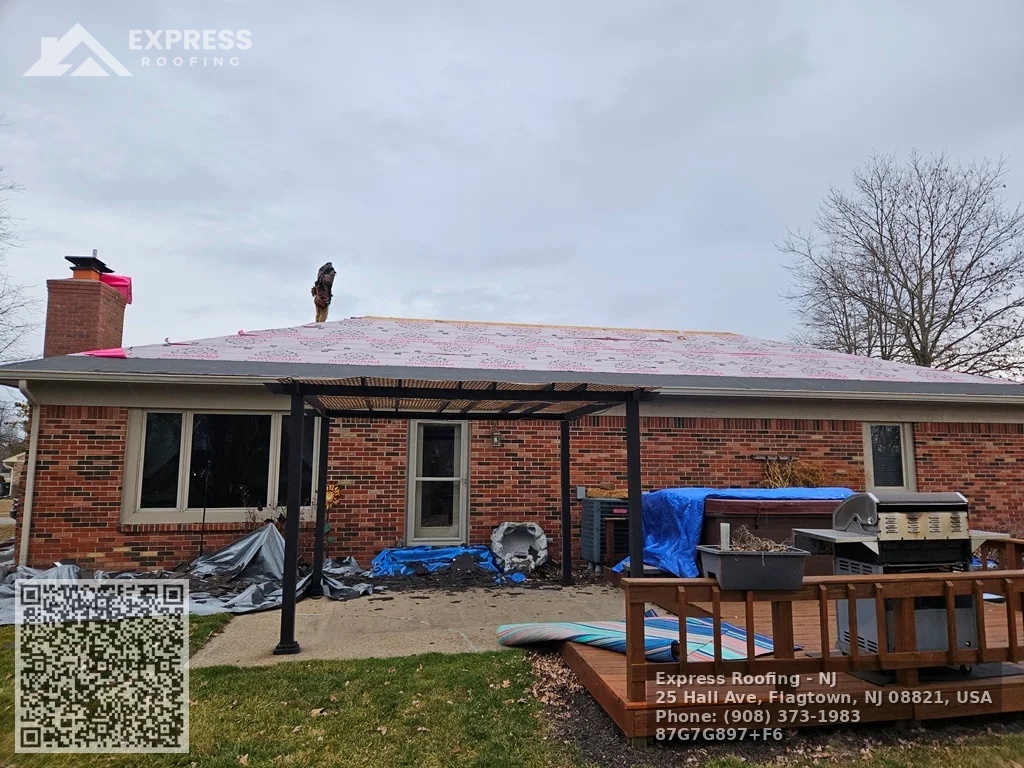
On the morning work begins, crews arrive with a dump truck or roll-off container and stage materials. Skilled teams protect what matters before they touch a shingle. Good companies set up tarps along the foundation, cover AC units, protect landscaping, and lay sheets of plywood against siding where tear-off debris might scuff it. Magnetic rollers come out early and often to capture nails.
Tear-off is loud and fast. Crews start at the ridge and work down, prying shingles and old underlayment from the deck. In many New Jersey homes built from the 1950s to 1980s, you will find 3/8 inch or 7/16 inch plywood or older plank sheathing. Both can work, but soft, delaminated, or gapped boards need replacement. A fair contract lists a per-sheet price because no one can predict decking damage perfectly from the ground. Expect the foreman to show you photos and ask permission before swapping more than a small number of sheets.
Once bare, the roof tells the truth. You can see prior patchwork, misnailed zones, and ventilation paths. This is where real value shows up. An experienced crew does not rush past the deck inspection. They secure loose sheathing, re-nail to framing if the old nails missed rafters, and straighten edges at the eaves for clean drip edge installation. They also look for signs of poor attic airflow: darkened sheathing from condensation, rust on nails, or mildew along the ridge.
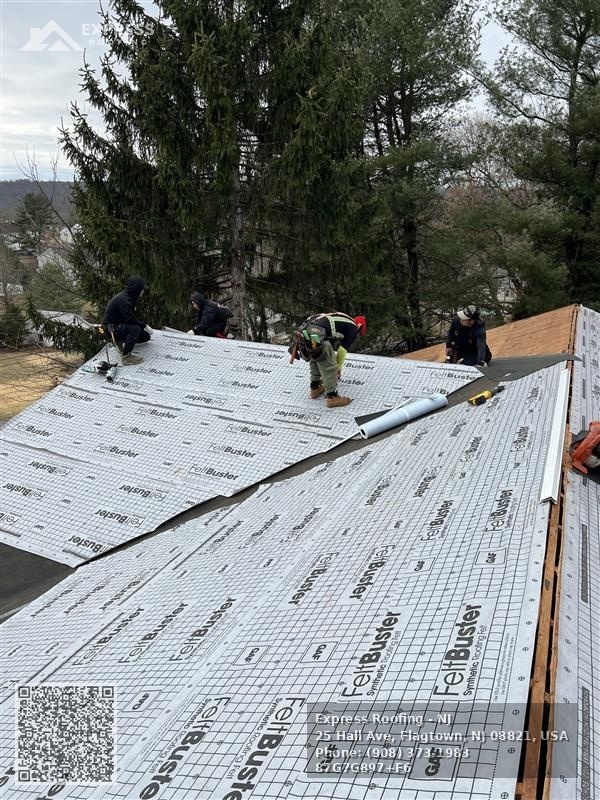
Underlayment and flashing set the tone for performance. Along the eaves, building codes in New Jersey typically require an ice and water barrier that extends a minimum distance up the slope from the exterior wall line. In practice, houses with low-slope sections, deep eaves, or history of ice dams may benefit from additional coverage. Valleys get full-width self-adhered membrane. The rest of the field usually receives a synthetic underlayment, which holds fast better than traditional felt if weather interrupts the job.
Drip edge goes on next, not as a decorative trim but as a water-management component. It closes the gap between decking and fascia and directs runoff into the gutter rather than behind it. Step flashing is replaced, not re-used. Each shingle course at a wall gets its own piece of step flashing woven into the field. Chimneys and skylights receive new metal and, where appropriate, a cricket to divert water. If your old roof leaked at a chimney, ask how the crew plans to counter-flash into the mortar joints. Grinding a proper reglet and installing new counter-flashing lasts longer than surface-sealed metal.
Shingle installation looks simple from the ground. The details are not. In wind-prone areas, a six-nail pattern and careful sealing at rakes matter. On steeper roofs, starter strips must be correctly aligned to block wind uplift. Valleys can be woven, closed-cut, or metal-open depending on the shingle brand and roof geometry. Many New Jersey installers favor closed-cut valleys for architectural shingles, but during heavy leaf fall under big oaks, a metal-open valley can shed debris better. A clinician’s eye for these trade-offs comes from working on hundreds of local homes, not just reading spec sheets.
Ventilation upgrades often slip into the middle of the day. If the house has a hot attic in summer and ice dam issues in winter, you likely need a continuous ridge vent with a matching intake path at the soffits. Without intake, a ridge vent is a straw with both ends pinched. Crews may open the ridge slot, install baffles at the eaves to keep insulation from blocking airflow, and ensure bathroom fans vent outside, not into the attic. This quiet work pays dividends in shingle longevity and indoor comfort.
Clean-up is not an afterthought. Good crews police the ground several times daily and again at the end. They use magnetic sweepers over lawns, beds, and driveways. They haul away debris the same day unless the project spans multiple days. Before they leave, they run water through gutters if they handled them, check penetrations, and photograph completed details: valleys, chimneys, pipe boots, and ridge vent terminations. A foreman should walk the property with you, answer questions, and leave documentation of the shingle batch, warranty registration, and any decking replaced.
How long it takes
A typical New Jersey colonial with a simple gable roof around 2,000 to 2,500 square feet of roof area usually takes one to two days. Add dormers, multiple valleys, a steep pitch, or several skylights, and you are at two to three days. Weather controls the calendar. If rain threatens halfway through day one, a competent crew will stop shingling early enough to button up with underlayment and tarps, then return when the forecast clears. You are paying not only for Roof replacement speed, but for judgment about when to push and when to protect the work.
Materials that make sense here
Architectural asphalt shingles dominate in our state because they balance cost, durability, and look. Three-tab shingles show their age sooner and do not handle wind as well. Metal roofing has a foothold on shore homes and modern designs inland, but it brings a different cost structure and requires a contractor familiar with standing seams and coastal fastening practices. Synthetic slate and cedar shakes appear on historic homes and high-end builds, but both demand strict attention to ventilation and underlayment.
For asphalt, look beyond color names. Ask about algae-resistant granules, especially if your home sits under trees. Look at the manufacturer’s nailing area design, which affects how easily crews can hit the sweet spot and get a good seal. On coastal properties or high-wind zones, verify the wind rating and the installation requirements to achieve it because those often dictate starter strips, number of nails, and special sealants at edges.
Underlayment is not glamorous, yet it is the safety net. A high-quality synthetic resists tearing if exposed to wind during the job and maintains friction so crews do not slip. Ice and water shield is nonnegotiable at eaves and valleys here. On low-slope transitions, it can be the difference between a dry ceiling and a recurring stain.
What a new roof costs in New Jersey
There is no single price of new roof that fits every house. Still, real numbers help. For an average single-family home with a straightforward roof and architectural shingles, expect the new roof cost to land roughly in the 6 to 10 dollars per square foot range in many parts of New Jersey as of recent seasons. Homes with steeper pitches, complex geometries, multiple layers to remove, skylight replacements, or copper and custom flashing work can run higher. Coastal work may also include stainless or coated fasteners and additional corrosion protection, adding to materials cost.
Estimates often show cost per “square,” which equals 100 square feet of roof area. When you compare quotes, make sure the scope matches. One company’s low number may omit new step flashing or ridge vent. Another may include full ice and water coverage and deck re-nailing. Cheap bids sometimes assume no sheathing replacement and no permit fees, then pass those along as “surprises.” Precision up front avoids frustration later.
Financing options exist through many roofing companies in New Jersey, particularly for full replacements. If you finance, read the terms carefully. Promotional zero-interest periods often revert to steep rates if the balance remains. Some homeowners bundle gutter replacement or small fascia repairs at the same time. That can save mobilization cost but watch that the line items remain clear so you see where each dollar goes.
Insurance, storms, and reality
Storm damage changes the conversation because insurance may be involved. New Jersey sees hail less often than the Plains, but hail events do happen. Wind is more common, especially on the coast and in open areas. If a storm tears off shingles, temporary tarping becomes step one. A reputable roof repair team will stabilize the situation quickly, then help you document damage for a claim if appropriate. Adjusters look for uniform directional impact or creased shingles, not just normal aging.
Remember that a roof at the end of its lifespan rarely qualifies for full replacement through insurance. Policies cover sudden damage, not wear. If a contractor promises a free roof after a routine storm, be skeptical. Work with roofing companies in New Jersey that explain the difference between storm events and maintenance issues, and who meet with adjusters to clarify what they see on the roof without inflating claims.
What you should do before crews arrive
Most of your preparation is practical, not dramatic. Move cars from the driveway so the dumpster can sit close to the house and nails do not find tires. Pull patio furniture a few feet back. Take pictures off walls below the roofline if you are sensitive to vibration. Let neighbors know about the schedule, especially if your houses sit close. If you have an irrigation system, mark sprinkler heads near the driveway to avoid damage from dumpsters or delivery trucks. Pets and kids should have an indoor plan, because tear-off is noisy and the yard is an active work zone.
One list helps here for clarity:
- Clear driveway and garage access for deliveries and dumpsters. Move patio furniture and planters away from foundation edges. Mark fragile landscaping and sprinkler heads. Secure wall items that could rattle during tear-off. Communicate preferred start times, power access, and restroom arrangements with the foreman.
The difference a good crew makes
Materials matter, yet installation craft carries more weight than most homeowners realize. I have climbed roofs where every brand-name product was present, but flashing overlaps were backward and nails cut through shingle mats because the gun pressure was too high. Conversely, I have seen modest materials perform for decades because the details were right. The best roofing contractor near me is the one whose crew leaders stay on site, make clean decisions when surprises appear, and do not flinch when you ask to see a valley before it is shingled over.
Respect shows in small actions. Crews who keep pathways clear, answer your questions without defensiveness, and clean up daily tend to get the big things right. Ask to meet the foreman before work begins. Exchange cell numbers. Agree on check-in points during the job. If your house has unique challenges, like a low-slope section over a porch that always ices, talk through the specific solution, not a generic promise.
After the last shingle
A responsible roofer returns to the attic once the roof is complete, especially near bath fans and chimneys, to confirm daylight is sealed and fasteners did not miss. Outdoors, they should run a hose over high-risk areas, like chimneys and valleys, while someone watches inside, if you had prior leaks. Expect documentation: an invoice that matches the estimate, receipts or registrations for shingle warranties, and notes on any decking replaced.
You may notice a few stray nails around the yard over the next week. Call and ask for an extra magnet sweep. That is part of service. As for maintenance, keep gutters clean, trim overhanging branches, and glance at penetrations each season. If you add a satellite dish or a solar array, insist that installers coordinate with your roofer for mounting points and sealants. Many leak calls start with third-party penetrations that ignored the roof system.
When a repair is smarter than replacement
Not every aging roof needs to come off this year. If granule loss is moderate, the field lies flat, and your only issue is a rotten fascia behind a chronic gutter overflow, a targeted repair and improved drainage can buy time. Skylight replacements also make sense during a re-roof, but you can often replace a failed skylight curb-by-curb without tearing off the whole plane. A reputable roof repair company will tell you when to wait and where to invest.
One quick comparison helps differentiate:
- Replace now if shingle brittleness is widespread, multiple planes leak, and decking shows soft spots. Repair if damage is localized to a single penetration or small valley area and the shingle field remains supple and intact.
Notice that both answers depend on what the crew sees and feels on the roof. That is why the first site visit matters so much.
Picking a contractor in a crowded market
Roofing companies in New Jersey range from one-crew outfits to regional firms with dozens of teams. Size alone does not predict quality. Look for state registration, liability and workers’ comp insurance, manufacturer certifications that actually align with the products they install, and a physical address you can visit if needed. Online reviews help, but prioritize patterns over star counts. If three different homeowners mention the same foreman by name for communication and neat work, that tells you something.
Gather two or three full proposals, not six. By the fourth visit, your roof feels like a public property and you will be swimming in conflicting advice. Ask each contractor to bring shingle samples you can hold, and to show photos of similar roofs they have completed nearby. Verify permit handling. Then pick the team you trust, not the cheapest number, and set a schedule that works around weather rather than wishful thinking.
Final thoughts from the field
A roof replacement is controlled chaos for a short stretch of time. Trucks arrive, shingles fly, nail guns chatter, and by dinner there is a new crown on the house. The difference between a smooth experience and a headache lives in groundwork: clear scope, realistic scheduling, and the craft that shows up when the old roof comes off. If you ask grounded questions, understand where the money goes, and choose a crew that can explain their choices without jargon, you will get a roof that shrugs off New Jersey weather and stays quiet overhead for decades.
Whether you started this search with roof repair on your mind or typed roofing contractor near me after a leak, use what you now know to steer the process. A roof is not a commodity. It is a system, and in our climate, the system earns its keep every season. If you respect that, the price of new roof stops feeling like a mystery and starts reading like an investment that you can evaluate on its merits.
Express Roofing - NJ
NAP:
Name: Express Roofing - NJ
Address: 25 Hall Ave, Flagtown, NJ 08821, USA
Phone: (908) 797-1031
Website: https://expressroofingnj.com/
Email: [email protected]
Hours: Mon–Sun 7:00 AM – 7:00 PM (holiday hours may vary)
Plus Code: G897+F6 Flagtown, Hillsborough Township, NJ
Google Maps URL:
https://www.google.com/maps/place/Express+Roofing+-+NJ/@40.5186766,-74.6895065,17z/data=!3m1!4b1!4m6!3m5!1s0x2434fb13b55bc4e7:0xcfbe51be849259ae!8m2!3d40.5186766!4d-74.6869316!16s%2Fg%2F11whw2jkdh?entry=tts
Coordinates: 40.5186766, -74.6869316
Google Map Embed
Social Profiles
Facebook: https://www.facebook.com/expressroofingnj
YouTube: https://www.youtube.com/@ExpressRoofing_NJ
X (Twitter): https://x.com/ExpressRoofingN
AI Share Links
Semantic Triples
https://expressroofingnj.com/
Express Roofing NJ is a customer-focused roofing contractor serving Somerset County, NJ.
Express Roofing NJ provides emergency roof repair for homes across Somerset County.
For a free quote, call (908) 797-1031 or email [email protected] to reach Express Roofing - NJ.
Connect on Facebook: https://www.facebook.com/expressroofingnj and watch project videos on YouTube: https://www.youtube.com/@ExpressRoofing_NJ.
Follow updates on X: https://x.com/ExpressRoofingN.
Find the business on Google Maps: View on Google Maps.
People Also Ask
What roofing services does Express Roofing - NJ offer?
Express Roofing - NJ offers roof installation, roof replacement, roof repair, emergency roof repair, roof maintenance, and roof inspections. Learn more: https://expressroofingnj.com/.
Do you provide emergency roof repair in Flagtown, NJ?
Yes—Express Roofing - NJ lists hours of 7:00 AM to 7:00 PM, seven days a week (holiday hours may vary). Call (908) 797-1031 to request help.
Where is Express Roofing - NJ located?
The address listed is 25 Hall Ave, Flagtown, NJ 08821, USA. Directions: View on Google Maps.
What are your business hours?
Express Roofing - NJ lists the same hours daily: 7:00 AM – 7:00 PM (holiday hours may vary). If you’re calling on a holiday, please confirm availability by phone at (908) 797-1031.
How do I contact Express Roofing - NJ for a quote?
Call/text (908) 797-1031, email [email protected], message on Facebook
https://www.facebook.com/expressroofingnj,
follow on X https://x.com/ExpressRoofingN,
or check videos on YouTube https://www.youtube.com/@ExpressRoofing_NJ
Website: https://expressroofingnj.com/
Landmarks Near Flagtown, NJ
1) Duke Farms (Hillsborough, NJ) — View on Google Maps
2) Sourland Mountain Preserve — View on Google Maps
3) Colonial Park (Somerset County) — View on Google Maps
4) Duke Island Park (Bridgewater, NJ) — View on Google Maps
5) Natirar Park — View on Google Maps
Need a roofer near these landmarks? Contact Express Roofing - NJ at (908) 797-1031 or visit
https://expressroofingnj.com/.